Part 3
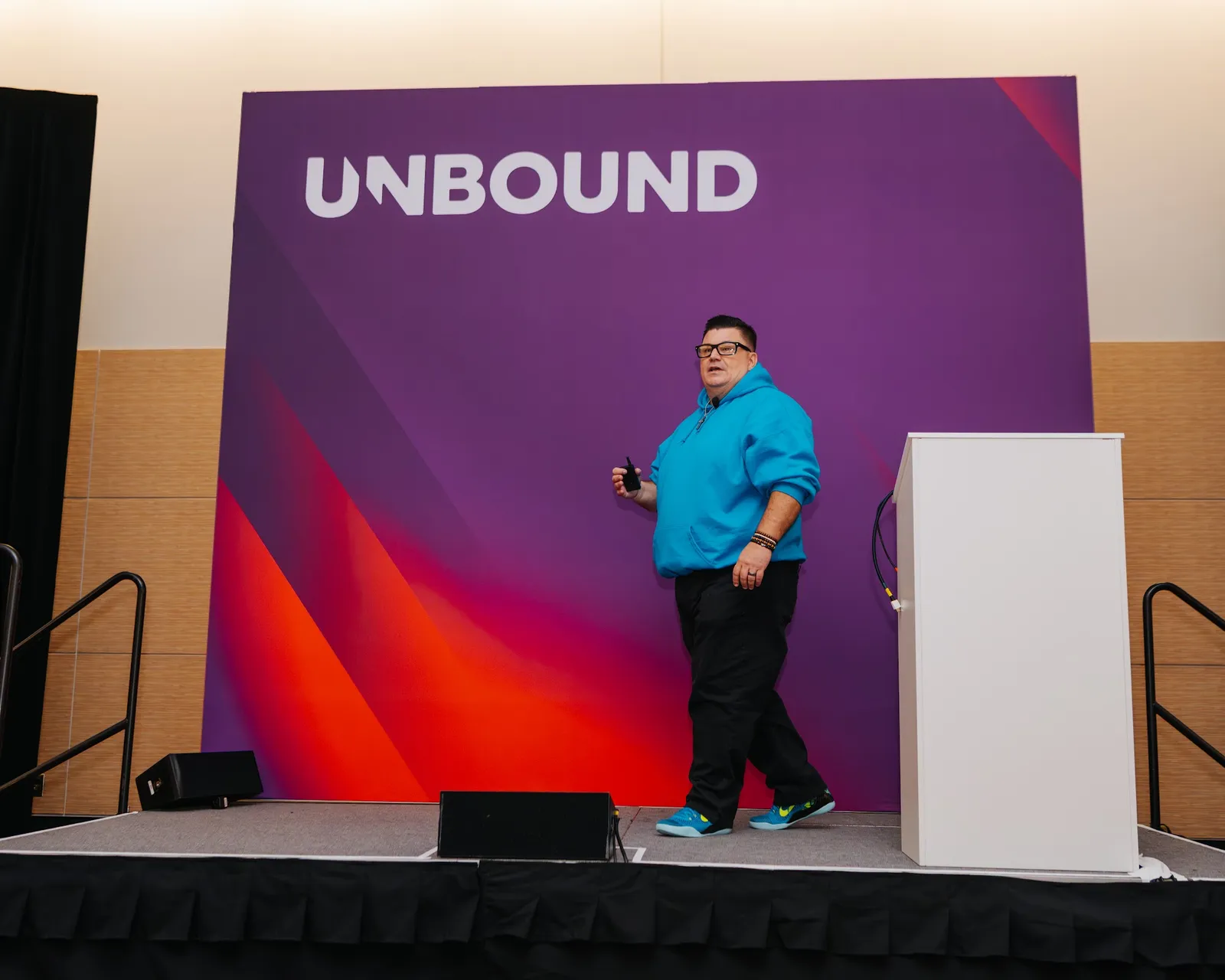
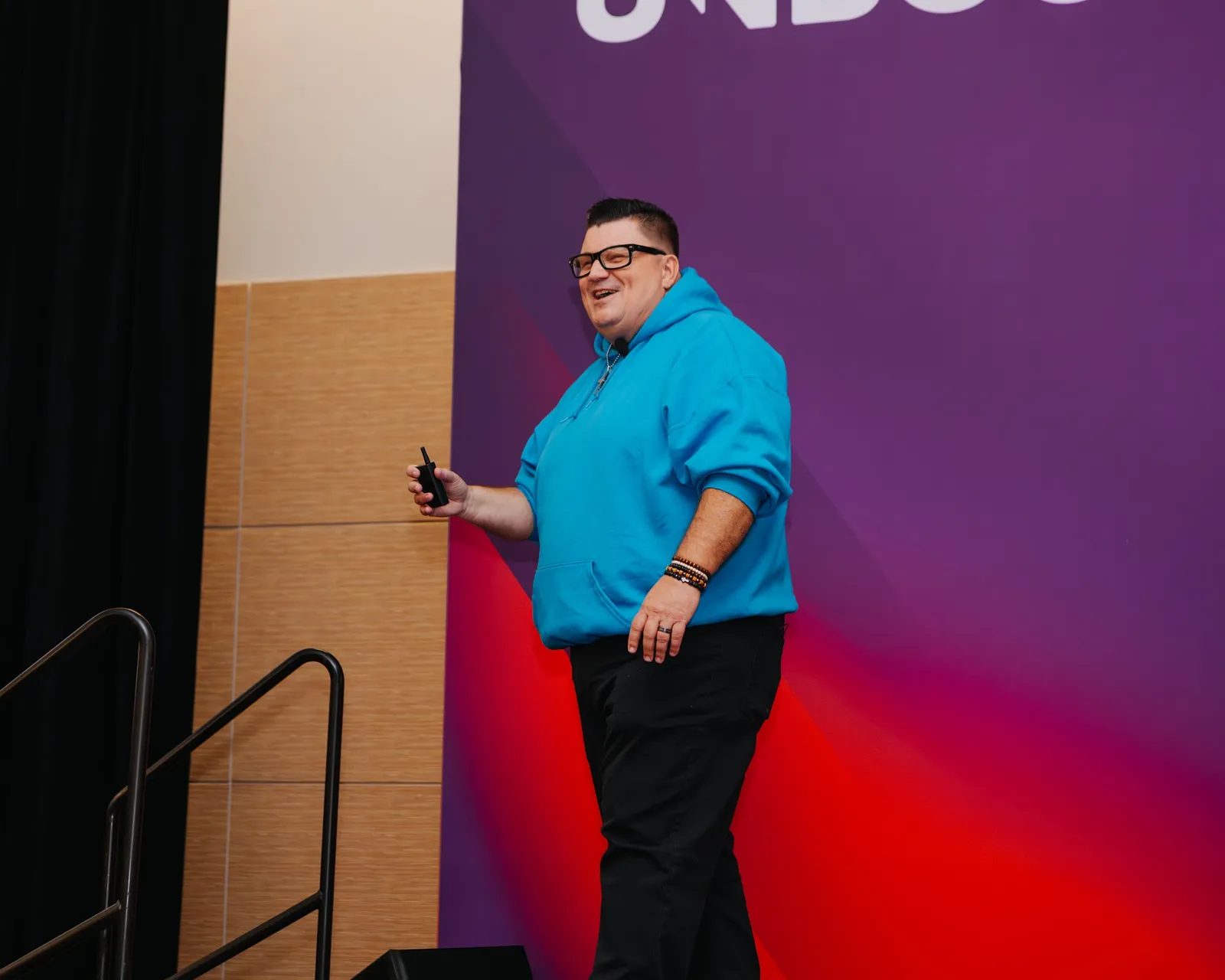
When I teach Layer 2, the way I did for UNBOUND 2026, I spend more time there than anywhere else, on purpose, because "this is the layer that carries the most pain." If you only take one machine home from this series, I'd want it to be this one.
So let's name the pain out loud, the same way I do in the talk. "Dang, gummit, content is hard."
You know the list. "The blank page, the calendar that laughs at you, the best intentions in January and the graveyard of half drafts by March." The podcast you swore you'd launch. The video series with exactly one episode. The newsletter that went out three weeks in a row and then "quietly without a funeral just stopped and died."
Here's what I need you to hear, because somebody reading this needs it today: "It's not because you're lazy." Some of the hardest working humans I know are drowning in this, "and they blame themselves the whole way down." That pit in your stomach on Sunday night about the week's content? That's not a work ethic problem. It never was.
This is Layer 2 of the five-layer system. If you missed the overview, it's in You Can't Out-Tactic a Leaking System. The mindset here is Content-Driven, and the hard thing is exactly what it sounds like. Content is hard.
The Cobbler's Kids Had No Shoes
I have to tell on myself here, because you deserve to hear it.
For four years, my company, Sidekick Strategies, published zero case studies. Zero. We do this for a living. We tell other people to document their wins. And our own wins sat in our heads, our clients' heads, and our inboxes, undocumented. "Not because we didn't have the wins. We had them."
Every time a prospect asked, "Do you have a case study on that?" there was a little flinch, because the answer was, well, sort of, let me tell you about it on a call.
"The cobbler's kids had no shoes." Next quarter, George. Next quarter we'll slow down and document everything. Then next quarter would show up with its own fires, and the case studies would slide again. "Four years of next quarter."
And the worst part? We knew better the whole time. Which taught me something I'll never forget: "Knowing better isn't a system. Good intentions aren't a system. Caring isn't a system."
So what changed? Not the team, not the effort, not how much we cared. We built the system. "Same team, same humans, same amount of effort. One new machine underneath them." Then we shipped seven case studies in seven days. "Not seven in seven months, seven in seven days."
"Four years of zero, and then a week of seven."
Those stories had been ready the whole time. They just needed a way out.
That's the anchor for this layer, and I'd put it on a whiteboard and look at it every day:
"Content was never hard because you lacked effort. It was hard because you lacked a system."
Capture, Relay, Finish Line
The machine has a simple shape. Three moves.
Capture is a repeatable way to get the story out of a human's head and onto the page, so it doesn't depend on anyone feeling inspired. Because "inspiration is a terrible employee. It doesn't show up on schedule and it quits every other Friday." A capture step can be a standing interview, a recorded call, a voice memo with five questions, or a form humans can fill out. The stories already exist. They're walking around your building and your clients' buildings right now. "You don't have a content shortage, you have a capture shortage." (If you want to go deeper on this, I've written about building a story bank, talking instead of typing, and why you should mine your transcripts, not your summaries.)
Relay is clean handoffs. The work moves through stages instead of piling up on one hero. And you know the hero. Some of you are the hero. Every draft, every review, every approval routes through one inbox, and when the hero gets busy, the whole engine stops. "Heroes don't scale... relays do."
Finish line is a real ship-it step. Somebody owns publish. There's a day it happens. Because "90% done and 0% done look exactly the same to your audience." Nobody ever read my almost-published case studies, and nobody will ever read yours. I wrote more about that last leg in Publishing Is Not a Button.
Software teams figured out a version of the finish line a long time ago. The Scrum Guide calls it a Definition of Done: "a formal description of the state of the Increment when it meets the quality measures required." Marketing teams almost never write one down, which is how "almost done" becomes a permanent address. Write one sentence that says what done means for a blog post, a case study, or an episode. Then give one human the right to call it.
And if you're short on time and people, you're not alone. In the Content Marketing Institute's 2026 research, resource constraints (time, people, budget) were one of the top three content challenges B2B marketers named. That's exactly why the answer can't be "try harder." It has to be a machine a tired team can actually run.
Worked Example: The Case Study Machine
Here's how our case-study system ran, so you can steal the shape.
- Capture: We built a form and asked seven existing clients, humans we love who love us back, to fill it out about the work we'd done together. The client supplies the truth.
- Relay, stage one: Their answers went to our writing agent, Quinn, which drafted the case study into our CMS.
- Relay, stage two: The draft got an editing pass.
- Relay, stage three: A human, me, read it and added the client's photo and logo.
- Finish line: The page got built, and the client read it and approved it before it went live.
"There was humans in the loop." Human at the start, supplying the story. Human in the middle, reading. Human at the end, approving. And because there's a system in place, every case study also creates a testimonial on our testimonials page that links back to the full story. One capture, two assets.
Those case studies are live today on our case studies page.
You don't need agents for this. Swap the writing agent for a teammate with a template, and the shape still holds.
Where AI Fits (and Where It Doesn't)
So where does AI fit? Here's the answer I'd tattoo on the industry if they'd let me:
"Human at the beginning. System identity story. AI human at the end."
You build the system first. You put a real human story at the center and attach it to an identity, who's talking and how they talk. Then, and only then, AI makes it faster and bigger. "AI is the multiplier at the end of that sentence. It's not the subject at the beginning of it."
Flip that order, start with AI on an empty system, and you get "a fire hose of forgettable content that nobody ever quotes." Words with no fingerprints on them. "More of that isn't a strategy, more of that is noise and nonsense with better grammar." And the grown-up robot from Layer 1 doesn't quote the fire hose.
Run the order right, and the system gives you consistency, the story gives you something worth saying, and AI gives you reach you couldn't afford any other way. "That's how you go from quotable to quoted."
The nerdy version of this is the "main brain" I teach: a wiki full of your mindsets, beliefs, core values, stories, and identities that your AI reads before it writes a word. I won't re-explain it here because I already have, in What Is a Second Brain?, Why Identities Matter, and Repeat, Don't Invent. As I said in the talk: "That ain't a prompt, ladies and gentlemen. That's a system."
Content Is a Way of Life, Not a Tactic
Why do so many companies start content and quit? When I was asked that recently, here's how I answered: they "think of it as a tactic to game an algorithm vs a way of life to add value. Their focus is the content and not the human on the other side of the content."
And if you're worried that everything's already been said, I believe "even if a piece is out there, the world needs our version of it based on the way we think and believe." I made the longer case in Is Content Dead in the Age of AI?
So don't go back to your team and say you need to make more content. "Tell them you need to build the machine that makes the content. Those are two different projects, and only one of them actually works."
"Sustainable beats impressive every single time. Because sustainable is still running a year from now."
Score Your Content Engine
Rate each statement 1 to 5 (1 Broken, 5 Dialed in).
- We have a repeatable way to get a story out of someone's head and onto the page.
- Content moves through clear stages with clean handoffs, not piled on one person.
- We could sustain our current content pace for a year without a hero burning out.
- We have a real 'ship it' step, not a graveyard of almost-done drafts.
- When we use AI, it serves a system with a human story at the center.
If you're the hero, you already know your score on the second one.
Where the Content Engine Hands Off
Content earns attention. That's the job. But attention on its own is just a bill you've already paid. What happens after the human raises their hand is the next layer, Conversation Infrastructure, and that's where most teams leak the most money without hearing a sound.
Want to know if your Content Engine is your weakest layer? The free scorecard will tell you in about ten minutes. When you're ready to build the machine, the full Content Engine course, the Content Engine Map worksheet, and an AI coach are waiting when you get the system at marketing.sidekickstrategies.com.
If you'd rather talk it through, I'd love to hear what you're building. Here's how.
 Free fit call
Let's see if we're a fit
Bring where you are and where you want to go. We'll figure out the next step together, even if that step isn't working with me.
Curious where you stand? Take the 3-minute AI readiness assessment.