Part 4
Layers 1 and 2 are about earning attention: getting seen, getting clear, getting quoted, getting talked about. This layer is about the moment right after you've earned it.
"The hand goes up, the form gets filled, the human leans in. And for most teams... nothing. Silence."
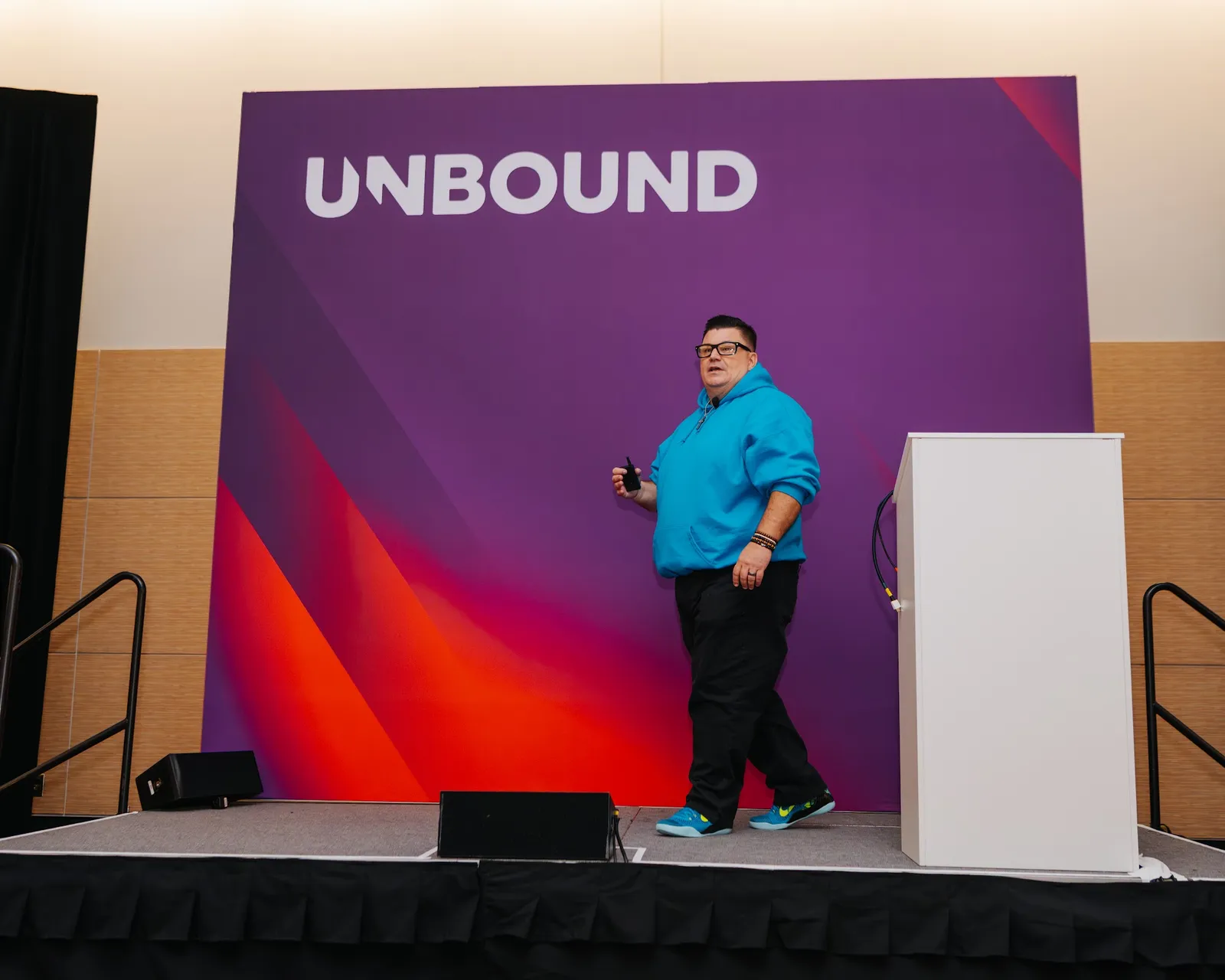
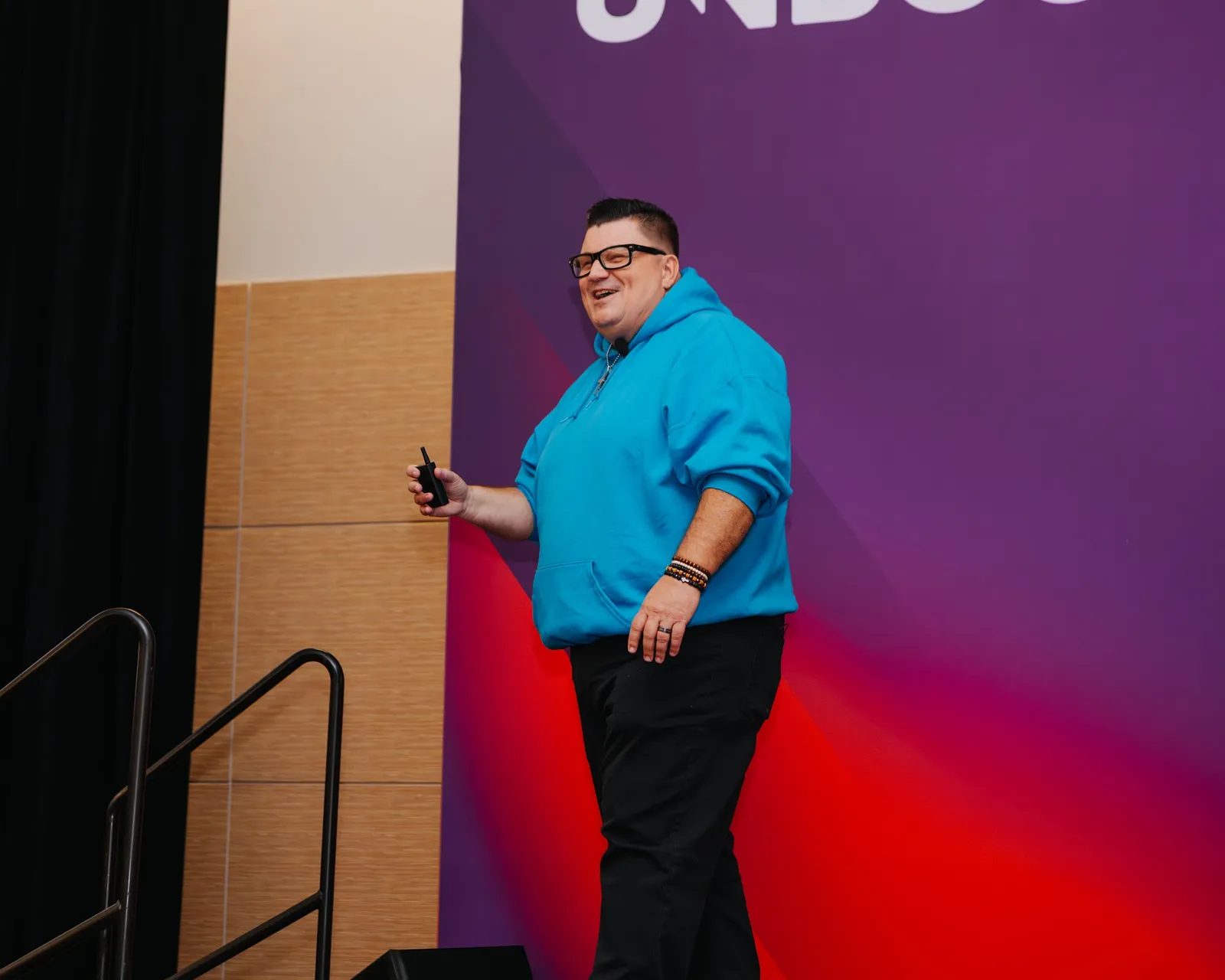
When I taught this layer for UNBOUND 2026, I opened it with a line I still believe: "attention you can't do anything with is just noise that you paid for." This is the layer where that noise either becomes a conversation or becomes a cost.
If you're just joining the series, the overview is in You Can't Out-Tactic a Leaking System. This is Layer 3, and the mindset behind it is Value-First.
Why I Renamed This Layer
First, a confession about the name. Here's exactly how I said it in the recorded UNBOUND talk:
"Layer three. Conversion infrastructure. First, let me be honest with you. I hate the word conversion, but I have to use words that you know versus words that I love because if I were to rename this, it would be conversation infrastructure."
So I did. After UNBOUND, I renamed it Conversation Infrastructure, and that's what it's called in the system now. Here's why, in the words I used when I made the call: "I feel like conversion dehumanizes the actual human and conversion is very much a hard cold sales term. What we want people to think about is: how do you have conversations with a human?"
Yes, a form still needs to be filled out. Yes, a meeting link still needs to be clicked. "But the mindset is: we're not converting a lead, but we're having a conversation with a human."
That's not just semantics. When you change the word, the copy changes and the flow feels different. We're "focused on conversations over conversions." You'll still hear me use "conversion" as a number, like a conversion rate, because that's a metric. But the human on the other side isn't a metric. They're the reason the metric exists.
The Silence Nobody Hears
Here's what the silence looks like under the hood. It's a signal with breaks in it. You spend real money getting a human interested, and then the wire has a gap, or several. "They fill out the form and fall into a void. They're ready, but your system isn't."
And what makes this layer so sneaky is that nothing looks broken from the outside. Traffic's up. Impressions are up. I've sat in meetings where marketing celebrated a record month of traffic, and in the same meeting sales asked, "Where are all the leads, aka humans that need our help?"
Meanwhile, "a human on the other side who was ready to buy filled out your form on Tuesday, and now it's Friday, and nobody's called them." They didn't email you to complain. "They just quietly went with somebody else. Broken signals don't make a sound."
The research on this is old, and it's still uncomfortable. When researchers audited 2,241 U.S. companies by sending each a web lead, 23% never responded at all, and the average response time among those that did respond within 30 days was 42 hours. Firms that tried to contact a lead within an hour were nearly seven times as likely to qualify it, meaning they got a meaningful conversation with a decision maker, as firms that waited even one hour longer. Notice the finish line they measured. Not a closed deal. A conversation.
A Money Problem Wearing a Marketing Costume
That's why I want you to hear this layer's anchor as a money statement, not a marketing one.
"Attention you can't convert isn't a marketing win. It's a leak you're paying for."
In the talk I said it the long way: "attention you can't convert, attention you can't have a conversation from isn't a marketing win. It's a leak that you're paying for." Every click you bought, every visit your content earned, every webinar seat and download, if it hits a gap in the wire, you paid full price and got nothing back. "That's a money problem wearing a marketing costume." Say it that way in your Monday meeting and watch how fast this layer gets prioritized.
Serve Before You Ask
So what's the fix? It's not what your instincts say. Your instincts say close harder, add urgency, more pop-ups, more pressure. "And the actual fix is the exact opposite: serve before you ask."
"Every step of your path should hand the human something valuable before it asks them for anything. Answer the question before you gate it. Give the tool before you pitch. Show the pricing before you have to beg for it."
I know serving sounds soft. It's not. "Trust moves faster than pressure." And "a human served remembers you. A human you squeeze remembers that too."
The buying data backs that up. Gartner found that 61% of B2B buyers prefer an overall rep-free buying experience, and that 73% actively avoid suppliers who send irrelevant outreach. But the same research found buyers still want a human for the contextual questions, like whether a solution actually fits their company. So humans aren't saying "leave me alone." They're saying "help me, and talk to me when it matters." That's a conversation, not a conversion.
So when is it okay to ask for someone's info? My rule is short: "When it leads to value!" When we used to teach pillar pages, the PDF version was there so a human could "take the pdf with you for convenience not for conversion." And the form on our own scorecard exists to save a human's score, not to spam them. I told that story in Serve From Stage, Never Pitch From Stage, so I won't retell it here.
And remember, a form isn't the only door. "Chat is also conversational engine. SMS and calls equal conversational options! Human communication!" A meetings link can be kinder than a form. Give humans the door that fits how they want to talk.
Think about the best buying experience you've ever had. I'd bet it "never felt like being pushed. It felt like being helped... Nobody closed you... They just kept opening doors." Then look at your own path and "count how many steps ask before they give. The count is your leak map."
Worked Example: From Crickets to Conversations
A client we worked with, Sonar Software, had sales sequences getting basically zero response. "Zero, zero, zero. I mean crickets."
You know the temptation when that happens. Volume. Send more, send louder, add another touch until somebody surrenders. "We should never be getting the humans to surrender."
Here's what I can tell you from the inside. We diagnosed the existing snippets and templates their sequences were built from. Then we wrote a guide that taught their sales team about value first, about conversations over conversions. Their team used AI together with that guide, as a rubric, to score their own sequences, templates, and snippets. Human-powered, AI-assisted, and backed by a system.
Their sequences went from basically zero to 2 to 4% response, and email opens climbed 11 to 15%. The published Sonar Software case study tells the bigger story around that, a move from WordPress to HubSpot, sales playbooks, reporting, and outreach optimization. The guide and the rubric are the part I watched happen. If you're not on HubSpot, every piece of this works in your CRM, because it's a mindset and a rubric before it's a tool.
Does 2 to 4% sound small? Nobody's putting it on a billboard. But "something beats nothing every single day of the week." Those were real conversations with real humans that didn't exist before, from the same list, the same product, and the same team. That's a leak sealed.
Want to try the same move on your own path? Here's an illustrative one, not a client:
- A human reads a helpful article.
- They click "Get the guide" and hit a nine-field form.
- They get an automated "thanks" email with nothing personal in it.
- A rep calls three days later and asks the same questions the form already asked.
Count it. Step 2 asks before it gives. Step 3 gives nothing. Step 4 drops the context. Three leaks in four steps. Seal one: make the guide readable on the page, and offer the PDF for convenience. That's a fair trade.
Score Your Conversation Infrastructure
Rate each statement 1 to 5 (1 Broken, 5 Dialed in).
- Our path offers something genuinely valuable before it asks for anything.
- The path from interested to in-pipeline is obvious, not a maze.
- We would fill out our own form for what we offer in return.
- When a lead moves from marketing to sales, the context travels with them.
- We know our conversion rate at each step; we're not flying blind on where the signal drops.
The third one stings a little. It's supposed to.
Where Conversation Infrastructure Hands Off
A path that converts into real conversations only holds if the operation behind it runs clean. If the follow-up depends on one person remembering, or the data that routes a lead is a mess, the wire frays again. That's Layer 4, Operations, the engine room nobody brags about.
If you want to know whether this is the layer leaking your pipeline, start with the free scorecard. And if you want the full Conversation Infrastructure course, The Conversion Wire worksheet, and a coach who knows your scores, get the system at marketing.sidekickstrategies.com.
If you'd rather talk it through, I'd love to hear what you're building. Here's how.
 Free fit call
Let's see if we're a fit
Bring where you are and where you want to go. We'll figure out the next step together, even if that step isn't working with me.
Curious where you stand? Take the 3-minute AI readiness assessment.